Thinking about a golf or club community in North Palm Beach but not sure where to start? You’re not alone. Between membership types, buy‑ins, HOA rules, and seasonal demand, there’s a lot to compare before you commit. In this guide, you’ll learn how clubs here are structured, what costs to expect, which documents to request, and what red flags to watch. You’ll also see local examples to help you match the lifestyle you want with the community that fits. Let’s dive in.
Why North Palm Beach club living
North Palm Beach sits near the heart of northern Palm Beach County’s golf corridor, with options that span municipal, private, and resort‑style experiences. Many buyers are seasonal, and amenities tend to peak in the late fall through early spring. Club calendars and tee sheets reflect that high‑season rhythm, so planning matters.
From a market standpoint, county reporting in mid‑2025 pointed to a more balanced environment compared with the ultra‑tight years, with single‑family median prices around the mid‑$600k range countywide. That context helps you time decisions and set expectations on inventory and pricing across product types. You can explore the latest county snapshot in the Palm Beach County update.
How club communities are structured
Understanding who owns and governs the club is the key to understanding costs, rights, and future assessments.
Municipal clubs
A municipally run club is owned and operated by the local government. The North Palm Beach Country Club is the local example. It offers publicly posted membership pricing, often includes resident vs non‑resident tiers, and may run a public tee sheet. Always ask if memberships are open or waitlisted. Learn more at the North Palm Beach Country Club and check current membership pricing and status.
Member‑owned equity clubs
Members typically purchase an equity share or refundable contribution and elect a board. You may have voting rights on major capital projects, and some portion of your equity can be refundable when you resign, depending on the formula. Policies and refund timing vary by club, so you should request the exact membership plan and financials before you make an offer on a home.
Proprietary operator‑run clubs
In a proprietary or non‑equity model, a company or developer owns the club and sells memberships under contract. Initiation fees are commonly non‑refundable, and governance stays with the owner. This model can resemble resort programming, which some buyers prefer for flexibility.
HOA‑run amenities
In certain planned communities, the HOA owns the amenities. Homeowners fund operations through HOA dues, and golf access may be bundled, optional, or separate. Because rules vary by subdivision, confirm what is mandatory in the recorded covenants and bylaws. Florida HOA law outlines association records and disclosures that you can request to verify how amenities are handled. You can review the relevant sections in Florida Statutes Chapter 720.
Membership types and true costs
Most clubs segment memberships by access and residency. You will often see:
- Full golf
- Sports or racquets
- Social or dining
- Resident vs non‑resident tiers
- Seasonal, trial, or corporate options
Look beyond the headline category to the “all‑in” annual number. Compare:
- Initiation or equity contribution: One‑time and either refundable (equity) or non‑refundable (non‑equity). Refund formulas, if any, differ.
- Dues and minimums: Operating dues plus any food and beverage minimums, cart fees, lockers, bag storage, and guest fees.
- Capital assessments: Equity clubs may levy special assessments for course or clubhouse projects. HOA communities can do the same for shared amenities.
- Transfer rules: Some clubs require board approval, maintain waitlists, charge transfer fees, or reserve a right‑of‑first‑refusal. These policies affect both access and resale.
Fees and policies change frequently. Always ask for the current written fee schedule and membership plan.
Local case studies: how they differ
North Palm Beach Country Club: municipal access
The village‑run North Palm Beach Country Club offers golf, tennis, and social amenities with transparent pricing and resident tiers. It is a practical choice if you want flexibility or are testing the waters before committing to a private club. Confirm membership availability and any waitlists on the village’s membership page and explore programs at the club’s site.
Lost Tree Village and Seminole: ultra‑private context
Lost Tree Village is a renowned private enclave with beach, Intracoastal, and club amenities. Membership and access are tightly controlled, which appeals to buyers who prioritize privacy and elite golf experiences. Seminole Golf Club is historically exclusive and invitation‑based rather than a typical residential‑community club where home purchases convey membership. See the club’s background at the Lost Tree Club.
Frenchman’s Reserve: gated country‑club living
Frenchman’s Reserve in the nearby Palm Beach Gardens submarket blends a signature course with a grand clubhouse, racquets, fitness, and social programming. Homes range from single‑family estates to attached options, so you can tailor space and maintenance levels to your needs. Review community programming and amenities at Frenchman’s Reserve Country Club. Always confirm whether any membership is mandatory in the sections of the HOA and club documents that govern your specific property.
Marina condos: Old Port Cove example
North Palm Beach also offers marina‑centric condo living where boating is the headline amenity. Old Port Cove is associated with a large marina presence according to corporate filings, which is why many buyers focus on slip access, assignment rules, and lease terms alongside condo due diligence. For context on marina scale, see Sun Communities’ filing that references Old Port Cove’s marina assets in the region on the SEC’s site.
Key questions to ask first
Ask these items early. A yes or no here can make or break fit and timing.
- Is membership mandatory for homeowners in this subdivision, and does it convey with the deed or sell separately?
- What membership category attaches to this property, if any, and is new membership availability guaranteed if none conveys?
- What are the current initiation, equity contribution, and annual dues by category, and what surcharges are excluded from those figures?
- Is the initiation or equity refundable? If so, what is the formula and timing, and are there resale restrictions?
- Is there a waitlist for the desired category? How long is it, and who manages it?
- What are tee‑time rules by season and membership class, including advance booking windows?
- What are guest policies and reciprocal agreements, and how do they affect family use?
- Are there rental restrictions that impact part‑time owners or investors?
Documents to request during contingencies
Deliver these to your attorney, lender, and title company as soon as you are under contract. Florida law sets content and timing for many of these disclosures.
- Club packet: membership plan, agreement, bylaws, rules, financials, and a history of dues increases
- Membership ledger and waitlist report: how many active members, openings, and turnover
- Transfer and resale policy: including any right‑of‑first‑refusal and sample resale settlements
- HOA or condo governing documents: declaration, bylaws, rules, current budget, reserve study, and recent audited or reviewed financials
- Estoppel or resale certificate: shows assessments, delinquencies, litigation, and transfer fees. Florida law caps estoppel fees and sets delivery windows. Review the estoppel statute in Florida Statutes 718.116.
- Recent board minutes: 12 to 24 months to surface upcoming projects, financial pressure, or disputes
- Master insurance declarations: policy types, wind or hurricane deductibles, and unit‑owner responsibilities
- If waterfront: seawall and dock permits, inspection and repair history, slip leases, and any dredging or permitting records. Marine work can require multiple agency approvals, so verify records. For permitting context, review this overview on marine construction approvals.
Red flags that warrant a pause
- Low reserves with major projects planned and no funding plan in place
- High owner delinquency in dues or assessments
- Pending litigation disclosed in minutes or estoppel
- Non‑transferable memberships or long waitlists when you need immediate access
- Missing or incomplete permitting records for docks or seawalls
Florida legal and timing essentials
Florida law sets standards for HOA and condo disclosures and estoppel content and delivery. Estoppel statements are time‑sensitive, and fees are capped, so order them early in the process to keep financing on track. Review key disclosure rules in Florida Statutes 718.116 and HOA records requirements in Chapter 720.
For condominiums, Florida now requires structural integrity reserve studies and milestone inspections for certain buildings. These reports can impact financing and insurance, so ask for the latest engineer’s report and any planned remediation. You can read the 2023 legislative update in SB 154.
Insurance, flood, and lender checks
Coastal and waterfront homes have unique insurance needs. Ask for association master policies and deductibles, plus any unit‑owner coverage requirements. Insurance costs in Florida can materially affect your monthly budget, so get quotes early.
On financing, lenders will review estoppel details, reserves, litigation exposure, special assessment history, and condo project approvals. Share the full HOA or condo document set with your lender during contingencies to avoid closing delays.
What you will see on tours
- Deep‑water estates: Large custom homes with private docks and lifts in gated enclaves. Expect high price points, big water views, and a boating‑first lifestyle.
- Private club enclaves: Low‑density neighborhoods anchored by elite golf and social access. Privacy and club pedigree tend to drive value and demand.
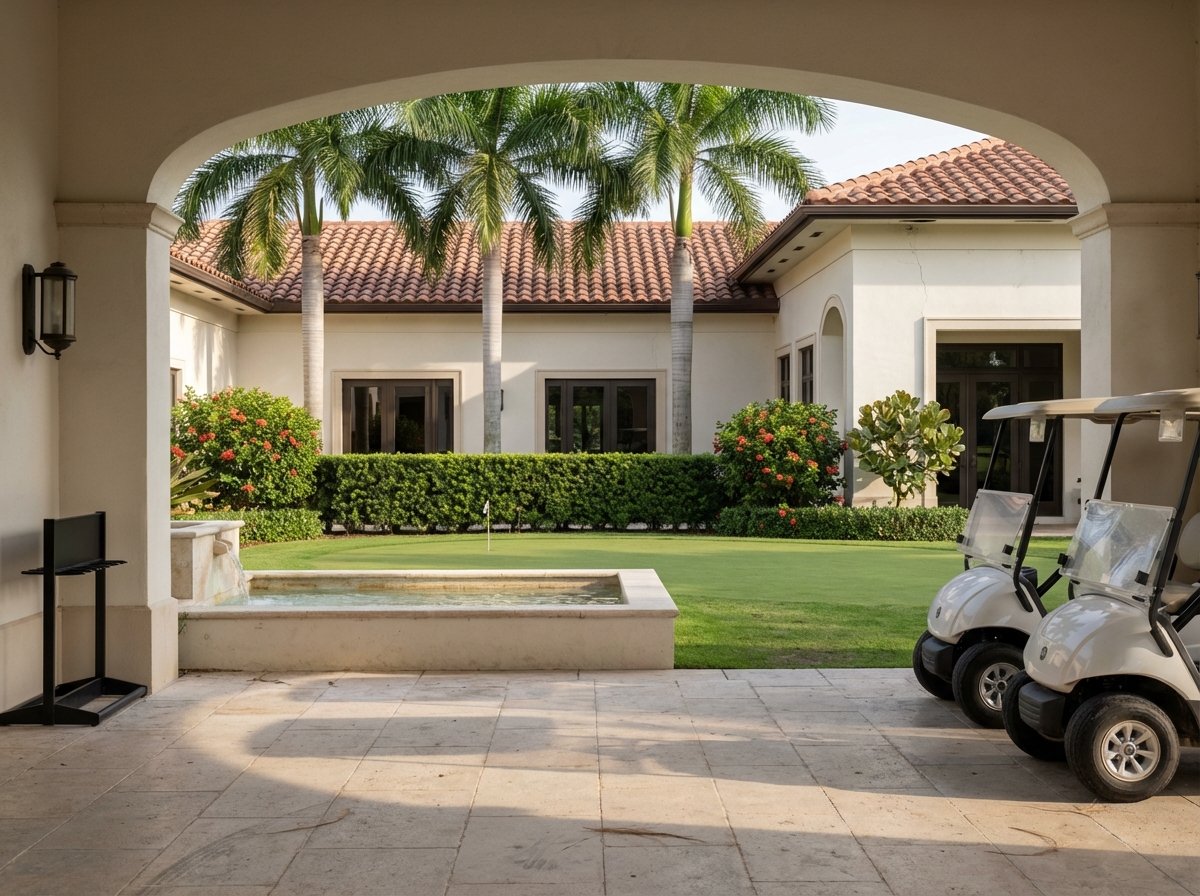
- Gated country‑club subdivisions: Single‑family estates alongside villas or coach homes with a private clubhouse, racquets, fitness, dining, and a signature course.
- Marina condominiums: Towers and low‑rise buildings around major marinas. Value often hinges on slip assignment rules, structural reports, and insurance strength. Old Port Cove is a prime example of a marina‑centric setting, as reflected in SEC‑filed documentation.
Price cues vary by neighborhood and product type. Countywide, mid‑2025 reporting pointed to a mid‑$600k single‑family median, while premium club and waterfront properties commonly trade higher. Smaller villas and coach homes can offer a lower entry point relative to estate homes, while ultra‑private enclaves and deep‑water estates sit at the upper end. Always anchor your expectations to recent neighborhood comps and the current club fee schedule.
How we help you choose with confidence
Selecting the right golf or club community is about more than the course. It is governance, cost structure, tee‑time access, and how the community’s rules support your lifestyle. Our team brings a white‑glove process to each search: we gather and analyze the club packet, HOA and condo financials, estoppel details, insurance and inspection reports, and any waterfront permitting history. Then we translate those details into a clear comparison so you can see total cost, access, and risk side by side.
If you are weighing seasonal use, an eventual full‑time move, or a cross‑market plan that includes Boston or Cape Cod, we help you map the timing and ownership structure that fits. When it is time to write, we coordinate with your lender, insurance partners, and counsel to keep milestones on track.
Ready to find your fit in North Palm Beach’s club landscape? Start a conversation with The Loveland Group and get a personalized neighborhood consultation.
FAQs
What should North Palm Beach club buyers ask first?
- Start with whether membership is mandatory, if it conveys with title, the current fee schedule, any refundability, and whether a waitlist will delay access.
How do equity and non‑equity club costs differ?
- Equity often includes a refundable component and member governance, while non‑equity typically has non‑refundable buy‑ins with decisions controlled by the operator.
What Florida documents protect condo buyers near clubs?
- You should receive a resale package plus an estoppel certificate that shows assessments, delinquencies, litigation, and transfer fees under Florida Statutes 718.116.
How do seasonal tee‑time rules affect me?
- Clubs often prioritize full golf members and limit access during peak season; ask for booking windows and restrictions by membership class before you join.
What should I review for marina‑centric condos?
- Confirm slip assignment or lease rules, building structural and reserve reports, master insurance deductibles, and any marine permits or dredging history.
Why do lenders care about HOA and club financials?
- Reserves, assessments, litigation, and project approvals affect risk and loan eligibility, so lenders use those documents to determine if the property meets guidelines.