Wondering whether Jamaica Plain is the right Boston neighborhood for your next home? If you want a place where green space, local business districts, transit access, and varied housing all meet, JP deserves a close look. This guide will help you understand how the neighborhood feels, what home types you’ll find, and which micro-areas may best match your lifestyle. Let’s dive in.
Why Jamaica Plain Stands Out
Jamaica Plain is one of Boston’s classic streetcar suburbs, annexed by the city in 1874. Boston Planning describes it as an important center for residential life, arts, and commerce, which helps explain why it feels both lived-in and active.
A big part of JP’s appeal is how much green space surrounds everyday life. The neighborhood is shaped by the Emerald Necklace, Jamaica Pond, Arnold Arboretum, and Franklin Park, giving it a park-rich character that stands out within Boston.
JP is also known for its mix of people, streetscapes, and activity levels. Boston describes the neighborhood as diverse, with community associations, nonprofit groups, seniors, young families, pets, and a strong Latino presence.
Parks Shape Daily Life in JP
If outdoor access matters to you, Jamaica Plain offers more than just a few small parks. Nature is part of how many people experience the neighborhood day to day, whether that means walking, biking, or simply living near major open space.
Jamaica Pond
Jamaica Pond is one of JP’s best-known landmarks. Boston lists it as a 68-acre pond with a 1.5-mile shore path, and the park supports activities like rowing, sailing, fishing, running, biking, concerts, and children’s programs.
For home shoppers, that means some parts of JP offer a rare mix of city living and easy outdoor access. If you picture morning walks or quick evening loops by the water, areas near the pond may be worth a closer look.
Arnold Arboretum and nearby green space
The Arnold Arboretum is a major draw in its own right. Boston describes it as a 265-acre living museum dedicated to woody plants, and it gives nearby sections of JP a distinctly green and open feel.
Nearby, you’ll also find Bussey Brook, Allandale Woods, and Nira Rock, all listed by Boston as urban wilds in Jamaica Plain. Forest Hills Cemetery adds another unusual open-space asset, with Boston describing it as a historic 275-acre cemetery, greenspace, arboretum, and sculpture garden.
Southwest Corridor connections
JP also benefits from the Southwest Corridor, a 4.7-mile linear park that connects Jamaica Plain, Roxbury, and Downtown Boston. For buyers who like to walk or bike for transportation as well as recreation, that connection can be a meaningful advantage.
Main Streets and Everyday Convenience
Jamaica Plain is not just about parks. It also has a strong network of commercial streets and squares that shape daily convenience, local culture, and neighborhood identity.
Centre Street as the neighborhood spine
Boston Planning says Centre Street has long been JP’s major retail street. In practical terms, that makes it one of the clearest organizing features for home shoppers trying to understand the neighborhood.
If you want easy access to shops, restaurants, services, and regular street activity, Centre Street is often central to the search. It can feel like both a neighborhood main street and a destination corridor, helped by notable local businesses like JP Licks and the Samuel Adams brewery.
Hyde Square, Jackson Square, and the Latin Quarter
Hyde Square and Jackson Square are among JP’s most active and culturally dense areas. Boston places Hyde Square at Centre and Day, and Jackson Square at Centre and Mozart, while the Latin Quarter Cultural District spans Hyde and Jackson Squares.
Boston says the Latin Quarter includes more than 125 businesses, with 65% immigrant-owned. It also includes notable community assets like the Blessed Sacrament Campus, Mozart Park, and the Connolly Branch of the Boston Public Library.
For buyers, this part of JP often fits best if you want a more urban, walkable setting with strong everyday convenience. It is one of the easiest areas to consider if your priority is being close to activity rather than tucked away from it.
Libraries, arts, and local anchors
Jamaica Plain also benefits from long-standing cultural and civic anchors. The neighborhood has a Boston Public Library branch on South Street and the Connolly Branch on Centre Street, and the renovated Jamaica Plain Branch reopened in 2017 with expanded community space.
Boston also highlights the Eliot School of Fine and Applied Arts and The Footlight Club, which has performed every year since 1877. These kinds of institutions help give JP depth beyond housing and retail, which can matter when you are thinking about long-term neighborhood fit.
Getting Around Jamaica Plain
If your weekly routine depends on transit or biking, JP has a lot to offer. Boston Planning describes the neighborhood as accessible by the Southwest Corridor, MBTA trains, and buses, with Forest Hills Station serving as the main transit hub.
The neighborhood is also notably bike-oriented and transit-oriented. Boston Planning reports that 38% of working residents commute by public transit and 6% commute by bicycle, which is the highest bike-commute share in Boston.
That does not mean every block feels the same. Some areas place you closer to station access and bus routes, while others feel more residential and removed from the busiest corridors.
Housing Types You’ll Find in JP
One of the most important things to know about Jamaica Plain is that it is not a single-product housing market. If you are expecting one dominant home style, JP will likely surprise you.
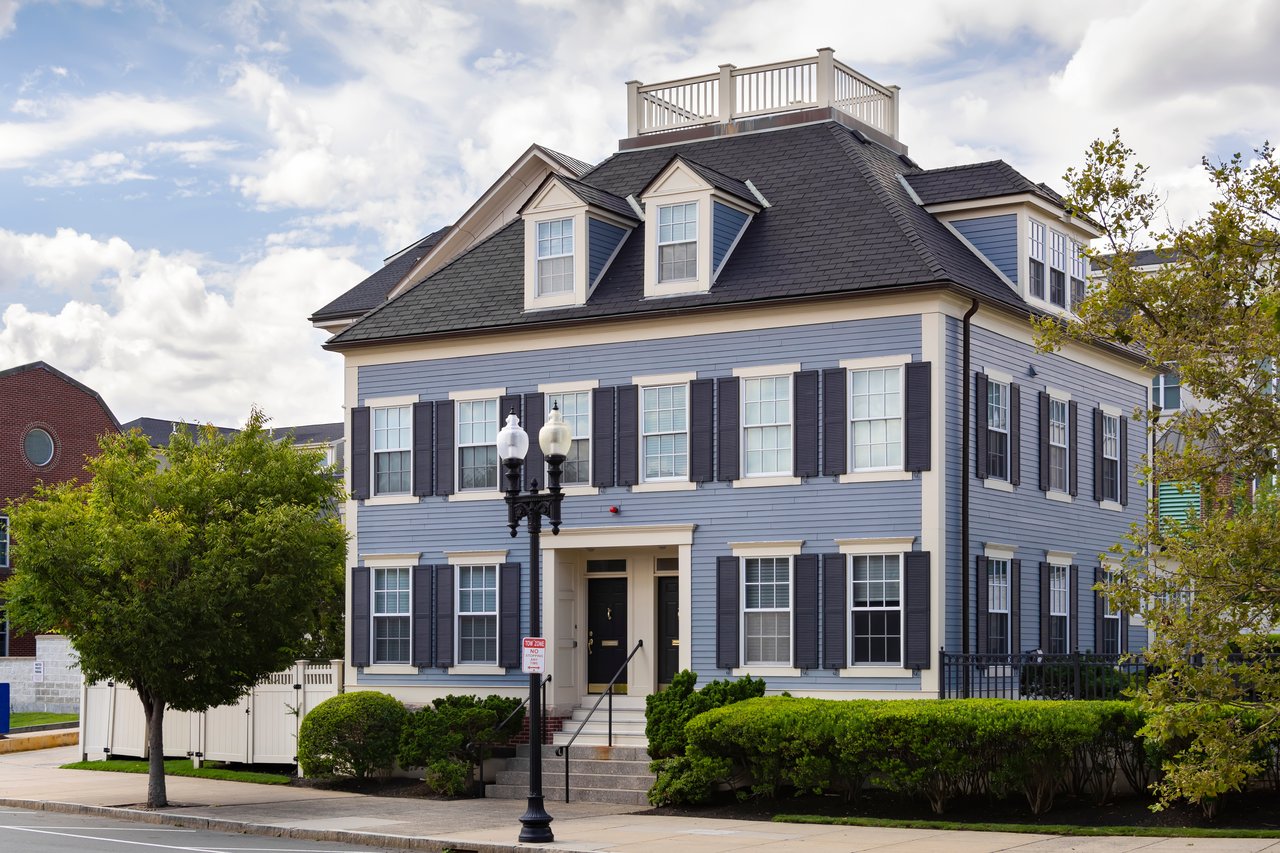
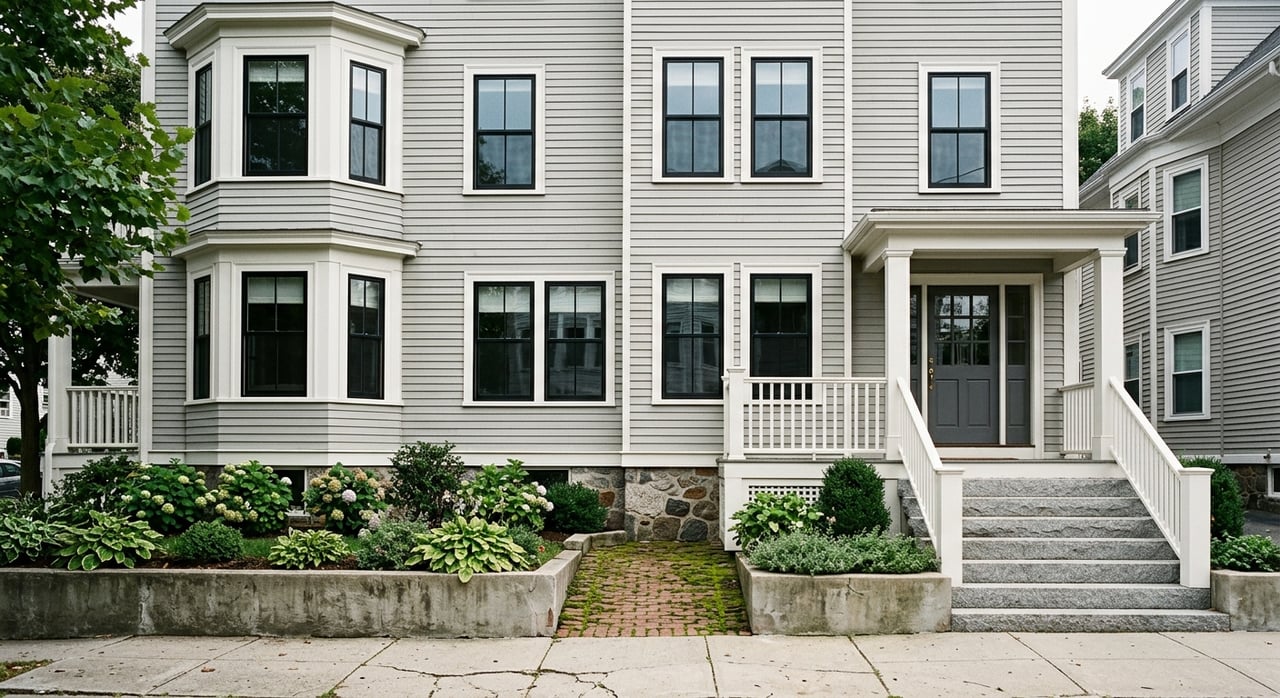
Boston planning documents describe a mix that includes one-family, two-family, three-family, row house, town house, and multifamily dwellings. A BPDA memo describing part of Hyde Square notes a varied mix of one-, two-, and three-family buildings, with some larger multifamily buildings scattered throughout.
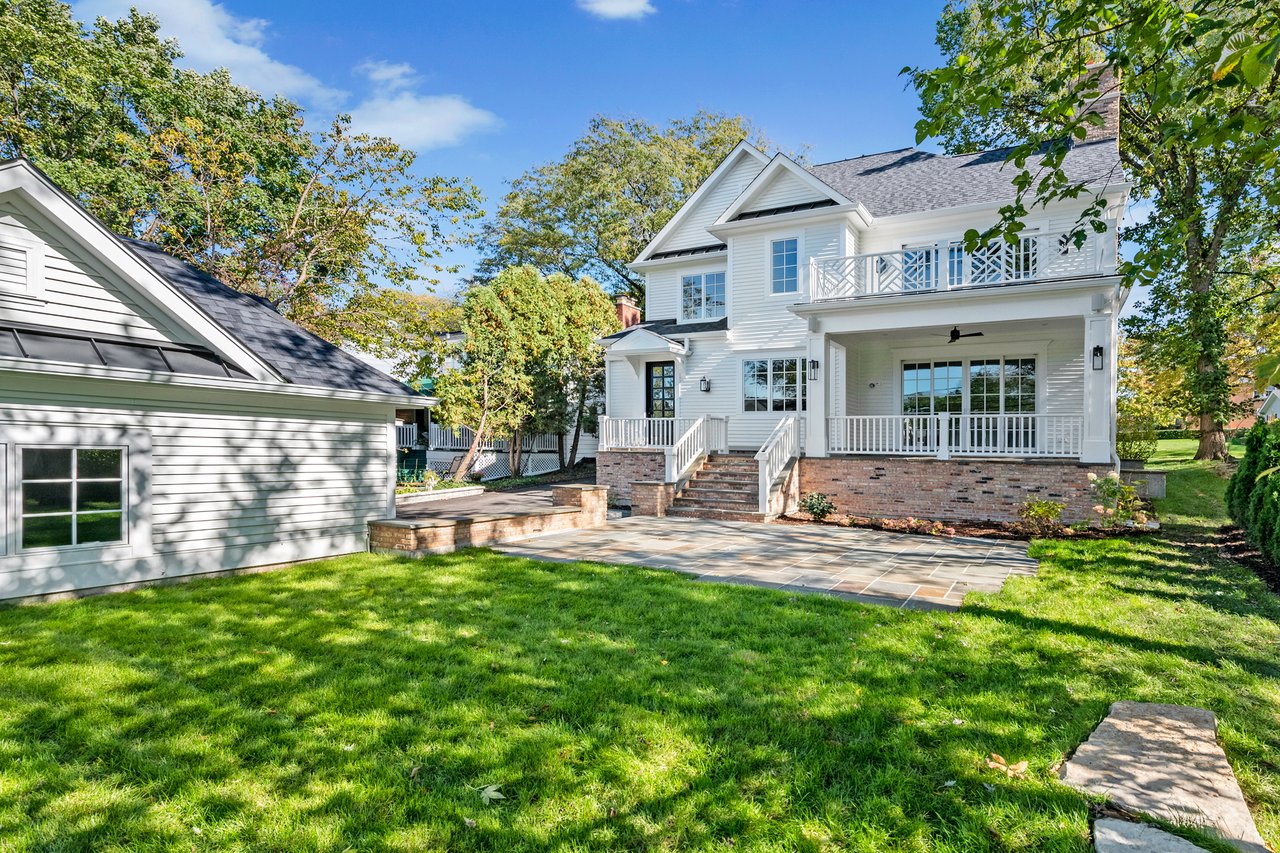
That mix is a major reason why two homes in the same neighborhood can feel very different. On one block, you may see classic triple-deckers and converted condos. On another, you may find detached homes or larger multifamily buildings.
An older 2011 city profile adds helpful background, even though it should not be treated as current inventory. In that report, condos made up the largest share of combined one-, two-, three-family and condo property types in JP, helping explain why many buyers think of the neighborhood as a mix of condos, triple-deckers, and detached homes.
Jamaica Plain Micro-Areas to Compare
When buyers say they want to live in Jamaica Plain, the next question is usually which part of Jamaica Plain. The neighborhood’s micro-areas can feel quite different in terms of street activity, transit access, and relationship to open space.
Hyde Square and Jackson Square
These areas offer one of the most walkable and convenience-focused versions of JP. If you want everyday services, cultural activity, and a more urban rhythm, this is often where your search starts.
Centre and South Streets
This corridor functions as a central retail spine through the neighborhood. Boston is also working on a transportation and placemaking plan for the stretch between Hyde Square and Forest Hills Station, which reinforces how important this corridor is to daily life in JP.
For buyers, this area often suits those who want a central location, visible street activity, and strong bus access. It is a practical place to focus if you want to stay connected to multiple parts of the neighborhood.
Forest Hills
Forest Hills combines strong transit access with close proximity to major green space. With Forest Hills Station as the neighborhood’s main transit hub and nearby access to the Arboretum, Bussey Brook, and Forest Hills Cemetery, this area often appeals to buyers who want easier commuting and more greenery.
Compared with the busiest commercial sections of JP, Forest Hills can feel somewhat less commercial. That balance can be appealing if you want convenience without being in the middle of the most active retail zones.
Sumner Hill
Sumner Hill is often associated with older-home character and a quieter street pattern. Boston notes that the Loring-Greenough House is the last surviving 18th-century residence in Sumner Hill, which gives useful context for the area’s historic feel.
If architectural character is high on your list, this pocket may deserve extra attention. It can offer a different experience from the more commercial squares.
Egleston Square
Egleston Square sits at Washington and School and acts as one of JP’s edge areas. It connects to a mixed JP and Roxbury commercial corridor and may appeal to buyers looking for a location that feels slightly apart from the more central parts of Jamaica Plain.
Jamaica Hills and Stonybrook
Boston’s neighborhood page also names Jamaica Hills and Stonybrook as local pockets. Public city sources provide fewer lifestyle details for these areas, so they are often best understood through a focused neighborhood tour and side-by-side comparison with the better-defined sections of JP.
What Home Shoppers Should Compare
A good Jamaica Plain home search is not just about price or square footage. It is about matching your daily routine to the right part of the neighborhood.
Here are a few of the biggest factors to compare:
- Commute pattern: Think about whether you want to be closer to Forest Hills, Jackson Square, Centre Street, or a quieter residential pocket.
- Housing form: Decide whether you are looking for a condo, a classic triple-decker setup, or a one-, two-, or three-family home.
- Lifestyle fit: Consider your balance between park access and main-street convenience.
- Block-by-block feel: JP’s mix of commercial districts, transit corridors, historic streets, and park-adjacent edges makes in-person comparison especially important.
In many Boston neighborhoods, broad boundaries can tell you a lot. In Jamaica Plain, block-level differences matter more than most buyers expect.
How to Narrow Your Search in JP
If you are just beginning your search, start with your non-negotiables. Do you want the shortest possible trip to transit, the easiest access to green space, or the most walkable daily errands?
Then look at housing type and street feel together. A condo near an active commercial corridor will live differently from a detached home on a quieter residential street, even if both are in Jamaica Plain.
This is where neighborhood-level guidance can save you time. Instead of touring the entire neighborhood broadly, you can compare a few targeted micro-areas and quickly see which version of JP fits your routine best.
If you’re thinking about buying in Jamaica Plain and want a clear, tailored strategy, The Loveland Group offers personalized neighborhood guidance with a thoughtful, high-touch approach. Start a conversation and get a consultation built around how you actually want to live.
FAQs
What is Jamaica Plain known for in Boston?
- Jamaica Plain is known for its mix of major green spaces, active main streets, transit access, and varied housing types, including condos, triple-deckers, and detached homes.
What types of homes can you find in Jamaica Plain?
- Home shoppers in Jamaica Plain can find one-family, two-family, three-family, row house, town house, condo, and multifamily housing options, depending on the block and sub-area.
Which part of Jamaica Plain is best for walkability?
- Hyde Square, Jackson Square, and parts of Centre Street are often the most walkable and convenience-focused areas for buyers who want easy access to businesses and daily services.
Which part of Jamaica Plain is best for green space access?
- Forest Hills and areas near Jamaica Pond or the Arnold Arboretum may appeal most if your priority is living closer to major parks and open space.
Is Jamaica Plain good for commuting without a car?
- Jamaica Plain offers strong transit and biking options, with MBTA train and bus access, the Southwest Corridor, and Forest Hills Station as the neighborhood’s main transit hub.
Why do buyers compare micro-areas within Jamaica Plain?
- Buyers compare Jamaica Plain micro-areas because the neighborhood includes commercial squares, quieter residential pockets, transit-centered areas, and park-adjacent sections that can feel very different from one another.